Our Two New Reports: Violations of the Right to Life of Children and Youth in the Kurdish Provinces between 2000 and 2015
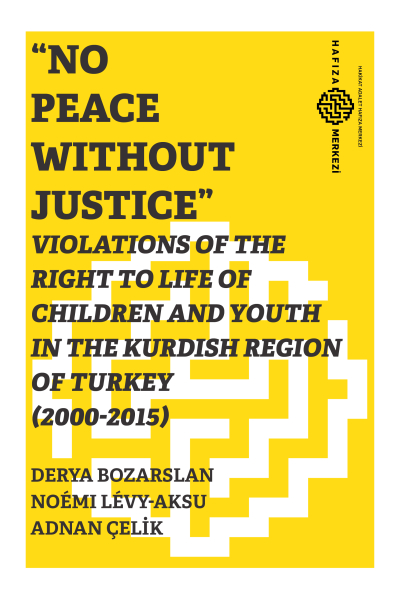
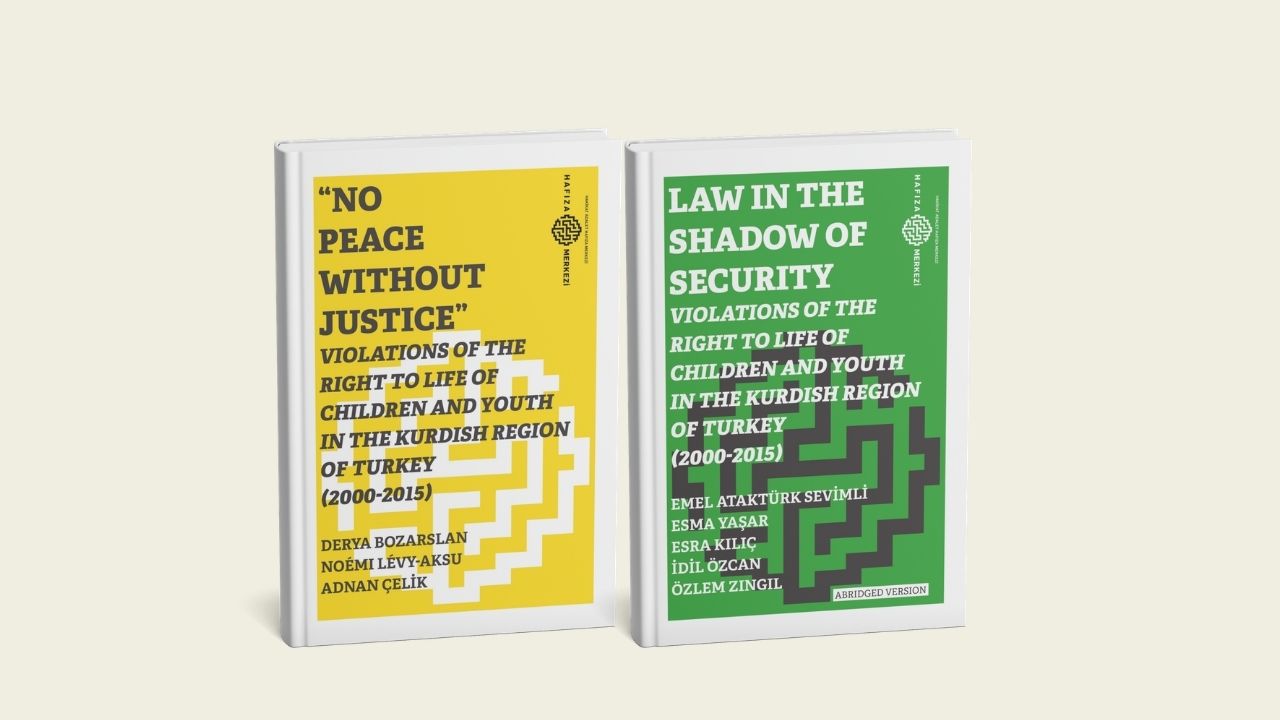
Our two new reports focusing on violations of the right to life of children and youth in the Kurdish provinces between 2000 and 2015 — “No Peace Without Justice” and “Law in the Shadow of Security” — are now published.
These publications are the outcome of a three-year comprehensive research process conducted within the framework of Hafıza Merkezi’s project “Justice Heals: A Holistic Approach to Violations of the Right to Life of Children and Youth.” Through this project, we aimed to make visible the stories of children and young people who lost their lives under the shadow of conflict and security policies, and to develop a holistic perspective on justice that addresses both legal and social dimensions. We believe that the right to life of children and youth is a universal value that must be protected regardless of identity or context.
Although both reports focus on the same period and the same violations, they were prepared from two complementary perspectives.
“No Peace Without Justice” examines violations of the right to life of children and youth in the Kurdish provinces between 2000 and 2015 from a sociological and anthropological perspective. It sheds light on how these violations occurred, the experiences of families and relatives, the social dimensions of the pursuit of justice, and the relationship between memory and peace.
“Law in the Shadow of Security” addresses the same violations within a legal framework. It analyzes patterns in the use of lethal force by security forces, the state’s obligations with respect to the right to life, and the attitude of judicial authorities toward accountability.
With these two publications, we sought to present a multidimensional analysis of the political, legal, and social conditions that made possible the deaths of children and youth in the context of the Kurdish question. In its founding years, Hafıza Merkezi focused on the crime of enforced disappearance within the dynamics of open conflict in the 1990s, conducting an in-depth analysis of this crime from the perspectives of both victims and perpetrators. Today, we extend a similar effort of understanding to the period between 2000 and 2015 — a time when open conflict had formally ended but a lasting peace had not been established, a period that can be described as one of “neither war nor peace.” In the publications, this period is examined as an intermediate phase in which violence continued in transformed forms, and where security policies and the limits of accountability mechanisms became defining features.
Another objective of our research is to open up a discussion on different definitions of justice and the multiple dimensions of the pursuit of justice. In the current political context — where transitional justice mechanisms are absent or their horizon remains uncertain — we seek to develop a framework that does not confine justice solely to punishment, but instead considers truth, accountability, reparation, and social healing together.
These publications were prepared to ensure that the lives lost are not forgotten and that the demand for justice remains visible. We believe that the demand for justice in cases of violations of the right to life is not an obstacle to peace, but rather one of its fundamental preconditions. Protecting the right to life of children and youth is a shared responsibility for all of us.
This interview is carried out with the support of the European Union through the Justice Heals project. Its contents are the sole responsibility of Hafıza Merkezi and do not necessarily reflect the views of the European Union.